Tag Archives: medicina d’urgenza

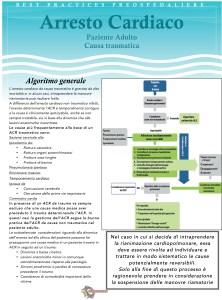
“Best Practice” preospedaliera: Arresto cardiaco da trauma

4 Ago

Tra tutte le “Best Practices”, quella che rappresenta più di tutte un cambio radicale di mentalità nell’approccio clinico e terapeutico, è la gestione dell’arresto cardiaco da causa traumatica. Vi prego quindi di leggere attentamente le raccomandzioni raccolte nel documento sottostante e di non esitare a esprimere le vostre riflessioni nei commenti.

Arresto cardiaco adulto traumatico

Chi è interessato ad approfondire il razionale che sta alla base  delle raccomandazioni può scaricare e leggere il documento completo: Arresto cardiaco nell’adulto da causa traumatica full text


Logo MEDEST2


Save

Save

Save

Save

Save

Save

Save

Save

“Best Practice” preospedaliera: Arresto cardiaco nel neonato

29 Lug

Continua la pubblicazione di una serie di monografie dedicate alle Best Practices per l’emergenza preospedaliera.

La quarta della serie riguarda l’arresto cardiaco nel neonato.

Potete scaricare il documento cliccando sull’icona sottostante.

Arresto cardiaco neonato


Logo MEDEST2


Save

“Best Practice” preospedaliera: Arresto cardiaco in età pediatrica

16 Lug

Continua la pubblicazione di una serie di monografie dedicate alle Best Practices per l’emergenza preospedaliera.

La terza della serie riguarda l’arresto cardiaco in età pediatrica.

Potete scaricare il documento cliccando sull’icona sottostante.Arresto cardiaco pediatrico


Logo MEDEST2


Save

“Best Practice” preospedaliera: Arresto cardiaco in gravidanza

1 Lug

Continua la pubblicazione di una serie di monografie dedicate alle Best Practices per l’emergenza preospedaliera.

La seconda della serie riguarda l’arresto cardiaco in gravidanza.

Potete scaricare il documento cliccando sull’icona sottostante.

Arresto cardiaco gravidanza_Page_1


Logo MEDEST2


Save

“Best Practice” preospedaliera

25 Giu

Da oggi inizia la pubblicazione di una serie di monografie dedicate alle Best Practices per l’emergenza preospedaliera.

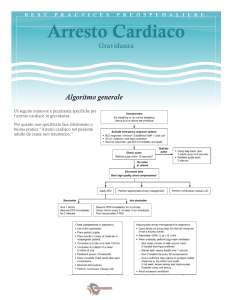
La prima riguarda l’arresto cardiaco nel paziente adulto da causa non traumatica.

Potete scaricare il documento cliccando sull’icona sottostante.

Arresto cardiaco adulto non traumatico_Page_1

Logo MEDEST2


Save

2016 NICE Major Trauma Guidelines. The pre-hospital recommendations.

21 Feb

NICE released the 2016 Major trauma Guidelines.

Many interesting recommendations where made for pre-hospital and in hospital providers about several topics

  • Airway management

  • Chest trauma

  • Haemorrage control

  • Circulatory access

  • Volume resuscitation

  • Fluid replacement

  • Pain management

  • Documentation

  • Training

Here is the Excerpt regarding the pre-hospital settings

Download the full guidelines for in-hospital recommendations and full description of Guidelines process and rationale behind every single recommendation

Download the full Guidelines at:

Major trauma: assessment and initial management

NICE guidelines [NG39] Published date: February 2016

Logo MEDEST2


Forget ACLS guidelines if you are dealing with Pulseless Electric Activity. Part 1.

5 Set
ACLS Guidelines are misleading about diagnosis and treatment of pulseless electric activity (PEA)
This takes to conceptual and clinical errors when treating patients in cardiac arrest.
Let’s see why and if there is a better way to follow when dealing with this kind of patients.
First part is about diagnosis and diagnostic tools.

Live your comment below and see you soon for Part 2. The treatment options.

Logo MEDEST2

My favourite VL view to increase first pass intubation

8 Feb

A debate is ongoing among #FOAMED social media about increasing first passage rate in tracheal intubation and some difficulties when using VL.

At the beginning of my experience with VL I experienced some difficulties, but with a radical change in technical approach I reached a good security on first pass success.

Here are my consideration and I hope will be useful for anyone is starting using VL


There are some fundamental differences in VL technique respect to DL, that makes the DL more easy and intuitive to pass the tube trough the cords.

3axys

The 3 axys theory for airway management

“Sniffing position” align the pharyngeal axis with the laryngeal one

Sniffing position

Sniffing position

Perfoming Direct Laryngoscopy with the laryngoscope we align the mouth axis to have a direct view of the cords.

DL view

DL VIEW


This view coincide with the route for passing the tube, making this step intuitive and easy.


When using a Video Laryngoscope we take our eyes right in front of the larynx, having a perfect “video” view of the vocal cords, but also minimally modifying the axis of the mouth.

Visione in videolaringoscopia

VL VIEW

This difference makes the act of passing the tube not so easy and not so intuitive, cause of the contrast between the perfect video laryngeal view and the not easy passage of the tube trough the cords.

In those cases the stylet, the Bougie/Froban or the external glottic maneuvers, are useful to facilitate the video-intubation.

tubo stylet

Golf stick shape of the tube+stylet

But the first goal is to reach this view on the screen of the videolaryngoscope.

IMG_1278

I want to have the epiglottis right at the center of the screen and this comes prior of a good view of the larynx.

Epiglottoscopy is the key point of my management of the airways in general and when prforming VL in particular.

Having the epiglottis in central position on the screen allow to:

  • lower the glottic plane facilitating intubation
  • decrease  the force to apply on the airways minimizing traumatism and neck movement in case of trauma.
  • fits all the difficult airway situations because a poor view of the cords is what you are looking for!

If you agree, memorize my favorite view and reach for it when using a video device to mange the airways.

All comments are welcome so please let me know your thoughts.

Logo MEDEST2


F.A.R. in E.M. (Focus Assessed Review in Emergency Medicine ) #4: Stroke. Bonus feature, 2015 ACEP Clinical Policy on Use of Intravenous tPA for the Management of Acute Ischemic Stroke in the Emergency Department

27 Gen
MEDEST F.A.RAnd here we are with the 4th episode of the F.A.R. series. If you accidentally lost the first two episodes you can find them here:
#1 Cardiac Arrest
#2 Airway Management
In this episode we’ll explore the best articles of 2014 about:

Stroke

Before starting we have to declare (if you are not aware of) that MEDEST is quite skeptical about the previous studies that are at the basis of thrombolytic therapy (Lo strano caso del trombolitico nell’ictus cerebrale ischemico, Pubblicate le nuove linee guida AHA/ASA sul trattamento precoce dello Stroke: nessuna nuova ed ancora qulache dubbio!, L’uso del trombolitico nello stroke. Stiamo giocando con la salute dei nostri pazienti?, rt-PA e Stroke: IST-3 l’analisi dei risultati). This can represent a potential bias on the choice of the articles. We also think that the actual evidences, and the consequent guidelines, are strongly influenced by commercial interests and not well supported from evidences that demonstrates how benefits outweight harms. We hope that 2015 will be the first year of a new era for stroke management, an era of well done studies producing strong evidences to achieve good neurological targets in all stroke patients.

In the first part we mention the litterature about thrombolytic therapy

And then the articles about endovascular therapy:

And now as anticipated in the title the 2015 ACEP Clinical Policy on Use of Intravenous tPA for the Management of Acute Ischemic Stroke in the Emergency Department. Those freshly published guidelines give answer at two of most recurrent questions on stroke treatment:

  1. Is IV tPA safe and effective for acute ischemic stroke patients if given within 3 hours of symptom onset?
  2. Is IV tPA safe and effective for acute ischemic stroke patients treated between 3 to 4.5 hours after symptom onset?
Download and read the full policy to discover the recommendations made and based on the strength of the available data.
DISCLOSURE: MEDEST strongly encourage AWARNESS reading the propoused articles.
Abstracts are often misleading and articles potentially biased. Even this selection is not immune from potential bias (just human factors not commercial interests).
So download the full text and read it carefully to have a clear and complete opinion of the related topics.


Follow MEDEST on Google+

Follow MEDEST on Facebook

Logo MEDEST2 


F.A.R. in E.M. (Focus Assessed Review in Emergency Medicine ) #3: Trauma

10 Gen
MEDEST F.A.RAnd here we are with the 3th episode of the F.A.R. series. If you accidentally lost the first two episodes you can find them here:
#1 Cardiac Arrest
#2 Airway Management
In this episode we’ll explore the best articles of 2014 about:

Trauma

Before approaching specific arguments about trauma here are some fundamental articles to read about new emerging concepts in trauma care. Those are the clinical and physiological bases to understand what is happening in the actual trauma management scene.

And now let’s go to specific area of interest:

  • Spine immobilization

Spine immobilization in trauma is changing.

After years of dogmatic approach to strict spine immobilization for all trauma patients regardless any other factor, is now pretty clear that not all the trauma patients benefits from this all or nothing way of thinking. MEDEST already faced the argument in previous posts (The Death of the Cervical Collar?) as also did some prehospital consensus guidelines (Faculty of Pre-Hospital Care Consensus Statements).

In 2014 many articles treated this topic in a critical and modern way of re-thinking spinal immobilization, in particular the widespread use of cervical collar. The lessons we learned is that:

  1. Widespread use of cervical collar in neck trauma has to be carefully evaluated (and even avoided) due to the low incidence of unstable spinal lesions.
  2. Routine use of cervical collar is of unclear benefit and supported by weak evidences. A new selective approach has to be implemented based on prehospital clearance protocols.

What is “revolution” in clinical practice? We don’t have the answer to this dilemma, but what is happening in fluid resuscitation for trauma patients seems likely to be revolutionary. Restrictive strategies and new blood products are the future for the treatment of trauma patients (read also Fluid resuscitation in bleeding trauma patient: are you aware of wich is the right fluid and the right strategy?).

But much more happened in 2014 about trauma….

Resuscitative throacotomy is now a reality not only “in” but even “out” of hospital, so read all about it

An evergreen topic is TBI but new concepts are arousing so read here the latest updates

New drugs and new protocols for airway and pain management: a rationale guide to choose the right drug for the right patient.

DISCLOSURE: MEDEST strongly encourage AWARNESS reading the propoused articles.
Abstracts are often misleading and articles potentially biased. Even this selection is not immune from potential bias (just human factors not commercial interests).
So download the full text and read it carefully to have a clear and complete opinion of the related topics.


Follow MEDEST on Google+

Follow MEDEST on Facebook

cropped-logo-medest-aussie.jpg 


ALL Ohio EM

Supporting ALL Ohio EM Residencies in the #FOAMed World

Triggerlab

Let's try to make it simple

thinking critical care

a blog for thinking docs: blending good evidence, physiology, common sense, and applying it at the bedside!

urgentcareultrasound

More definitive diagnosis, better patient care

Critical Care Northampton

Reviewing Critical Care, Journals and FOAMed

OHCA research

Prehospital critical care for out-of-hospital cardiac arrest

SonoStuff

Education and entertainment for the ultrasound enthusiast

phemcast

A UK PREHOSPITAL PODCAST

First10EM

Emergency medicine - When minutes matter...

Songs or Stories

Sharing the Science and Art of Paediatric Anaesthesia

airwayNautics

"Live as if you will die tomorrow; Learn as if you will live forever"

resusNautics

Navigating resuscitation

The Collective

A Hive Mind for Prehospital and Retrieval Med

Dave on Airways

Thoughts and opinions on airways and resuscitation science

FOAMcast

A Free Open Access Medical Education Emergency Medicine Core Content Mash Up

Broome Docs

Rural Generalist Doctors Education

St.Emlyn's

Emergency Medicine #FOAMed

"CardioOnline"Basic and Advanced Cardiovascular medicine" Cariology" concepts and Review -Dr.Nabil Paktin,MD.FACC.دکتـور نبــــیل "پاکطــــین

این سایت را به آن دکتوران و محصلین طب که شب و روز برای رفاه نوع انسان فداکاری می کنند ، جوانی و لذایذ زندگی را بدون چشمداشت به امتیاز و نفرین و آفرین قربان خدمت به بشر می کنند و بار سنگین خدمت و اصلاح را بدوش می کشند ، اهداء می کنم This site is dedicated to all Doctors and students that aver the great responsibility of People’s well-being upon their shoulders and carry on their onerous task with utmost dedication and Devotionاولین سایت و ژورنال انتــرنتی علـــمی ،تخـصصی ، پــژوهشــی و آمــوزشــی طبـــی در افغــانســـتان

EmergencyPedia

Free Open Access Medical Education

Little Medic

Learning everything I can from everywhere I can. This is my little blog to keep track of new things medical, paramedical and pre-hospital from a student's perspective.

Prehospital Emergency Medicine Blog

All you want to know about prehospital emergency medicine

Italy Customized Tour Operator in Florence

Check out our updated blog posts at https://www.italycustomized.it/blog

GoogleFOAM/FOAMSearch

The FOAM Search Engine

EM Lyceum

where everything is up for debate . . .

Pediatric EM Morsels

Pediatric Emergency Medicine Education

AmboFOAM

Free Open Access Medical Education for Paramedics

Rural Doctors Net

useful resources for rural clinicians

Auckland HEMS

Unofficial site for prehospital care providers of the Auckland HEMS service

ECHOARTE

L'ECOGRAFIA: ENTROPIA DELL'IMMAGINE

MEDEST

Prehospital Emergency Medicine

EM Basic

Your Boot Camp Guide to Emergency Medicine

KI Doc

WE HAVE MOVED - VISIT WWW.KIDOCS.ORG FOR NEW CONTENT

Emergency Live

Prehospital Emergency Medicine

AMP EM

Academic Medicine Pearls in Emergency Medicine from THE Ohio State University Residency Program

Prehospital Emergency Medicine

 Academic Life in Emergency Medicine

Prehospital Emergency Medicine

Comments on: Homepage

Prehospital Emergency Medicine

Greater Sydney Area HEMS

The Pre-Hospital & Retrieval Medicine Team of NSW Ambulance