Tag Archives: Guidelines

Linee Guida 2014 sulla gestione del paziente con Fibrillazione Atriale

11 Giu

Rinnovata attenzione al rischio cardioembolico anche nei pazienti con insorgenza databile entro le 48 ore, attenta anamnesi cardiologica per la scelta del farmaco giusto, e molto altro ancora.

Una veloce (e spero completa) guida per il medico d’emergenza al trattamento della FA dal territorio al DEA.

o visualizza la presentazione cliccando qui

References:

2014 AHA_ACC_HRS Guideline for the Management of Patients With Atrial Fibrillation

MEDEST you tube

Highlights from 2014 AHA/ACC/HRS Guideline for the Management of Patients With Atrial Fibrillation

24 Apr

2014 AHA/ACC/HRS Guideline for the Management of Patients With Atrial Fibrillation

Sono state pubblicate le linee guida 2014 sul trattamento dei pazienti con Fibrillazione Atriale.

Ecco i punti  d’interesse per la medicina d’urgenza.

Per approfondire scaricate il full text nella sezione Linee Guida

Definitions:

  • “Paroxysmal AF”    “AF that terminates spontaneously or with intervention within 7 d of onset. Episodes may recur with variable frequency.”
  • “Persistent AF”    “Continuous AF that is sustained >7 d.”
  • “Longstanding persistent AF”    “Continuous AF of >12 mo duration.”
  • “Permanent AF”    “Permanent AF is used when there has been a joint decision by the patient and clinician to cease further attempts to restore and/or maintain sinus rhythm.
  • “Nonvalvular AF”    “AF in the absence of rheumatic mitral stenosis, a mechanical or bioprosthetic heart valve, or mitral valve repair.”
  • “Lone AF” is a historical descriptor that has been variably applied to younger individuals without clinical or echocardiographic evidence of cardiopulmonary disease, hypertension, or diabetes mellitus (4-7).
    Because definitions are variable, the term “lone AF’” is potentially confusing and should not be used to guide
    therapeutic decisions.
Types of AF

AF Types

Clinical Evaluation: Recommendation

Class I
  • Electrocardiographic documentation is recommended to establish the diagnosis of AF. (Level of Evidence: C)

Rate control in AF

Class I
  • Control of the ventricular rate using a beta blocker or nondihydropyridine calcium channel antagonist is recommended for patients with paroxysmal, persistent, or permanent AF (260-262). (Level of Evidence: B)
  • Intravenous administration of a beta blocker or nondihydropyridine calcium channel blocker is  recommended to slow the ventricular heart rate in the acute setting in patients without pre-excitation. In hemodynamically unstable patients, electrical cardioversion is indicated. (Level of Evidence: B)
  • In patients who experience AF-related symptoms during activity, the adequacy of heart rate control should be assessed during exertion, adjusting pharmacological treatment as necessary to keep the ventricular rate within the physiological range. (Level of Evidence: C)
Class IIa
  • A heart rate control (resting heart rate <80 bpm) strategy is reasonable for symptomatic management of AF. (Level of Evidence: B)
  • Intravenous amiodarone can be useful for rate control in critically ill patients without preexcitation. (Level of Evidence: B)
Class IIb
  • A lenient rate-control strategy (resting heart rate <110 bpm) may be reasonable as long as patients remain asymptomatic and LV systolic function is preserved. (Level of Evidence: B)
  • Oral amiodarone may be useful for ventricular rate control when other measures are unsuccessful or contraindicated. (Level of Evidence: C)
Class III: Harm
  • Nondihydropyridine calcium channel antagonists should not be used in patients with decompensated HF as these may lead to further hemodynamic compromise. (Level of Evidence: C)
  • In patients with pre-excitation and AF, digoxin, nondihydropyridine calcium channel antagonists, or intravenous amiodarone should not be administered as they may increase the ventricular response and may result in ventricular fibrillation (274). (Level of Evidence: B)

Drugs

Beta blockers
  • Metoprolol tartrate 2.5–5.0 mg IV bolus over 2 min; up to 3 doses 25–100 mg BID
  • Atenolol  25–100 mg QD
  • Esmolol 500 mcg/kg IV bolus over 1 min, then 50–300 mcg/kg/min IV
  • Propranolol 1 mg IV over 1 min, up to 3 doses at 2 min intervals 10–40 mg TID or QID
  • Nadolol 10–240 mg QD
  • Carvedilol 3.125–25 mg BID
  • Bisoprolol 2.5–10 mg QD
Nondihydropyridine calcium channel antagonists
  • Verapamil (0.075-0.15 mg/kg) IV bolus over 2 min, may give an additional 10.0 mg after 30 min if no response, then 0.005 mg/kg/min infusion 180–480 mg QD (ER)
  • Diltiazem 0.25 mg/kg IV bolus over 2 min, then 5-15 mg/h 120–360 mg QD (ER)
Digitalis glycosides
  • Digoxin 0.25 mg IV with repeat dosing to a maximum of 1.5 mg over 24 h 0.125–0.25 mg QD
Others
  • Amiodarone 300 mg IV over 1 h, then 10–50 mg/h over 24 h 100–200 mg QD

AF indicates atrial fibrillation; BID, twice daily; ER, extended release; IV, intravenous; N/A, not applicable; QD, once
daily; QID, four times a day; and TID, three times a day

Rate-control-strategy-in-AF

Approach to Selecting Drug Therapy for Ventricular Rate Control

Rhythm Control

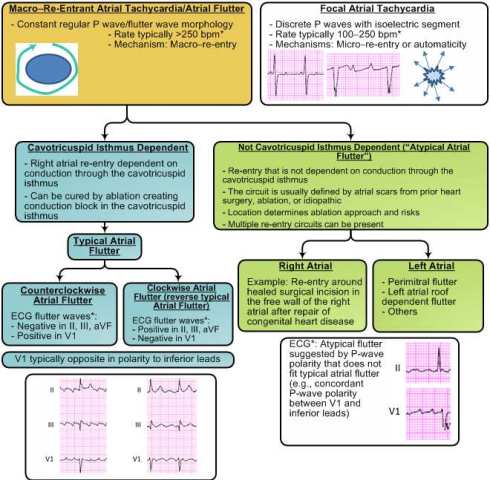
Electrical and Pharmacological Cardioversion of AF and Atrial Flutter

Thromboembolism Prevention: Recommendations
Class I
  • For patients with AF or atrial flutter of 48-hour duration or longer, or when the duration of AF is unknown, anticoagulation with warfarin (INR 2.0 to 3.0) is recommended for at least 3 weeks prior to and 4 weeks after cardioversion, regardless of the CHA2DS2-VASc score and the method (electrical or pharmacological) used to restore sinus rhythm (313-316). (Level of Evidence: B)
  • For patients with AF or atrial flutter of more than 48 hours or unknown duration that requires immediate cardioversion for hemodynamic instability, anticoagulation should be initiated as soon as possible and continued for at least 4 weeks after cardioversion unless contraindicated. (Level of Evidence: C)
  • For patients with AF or atrial flutter of less than 48-hour duration and with high risk of stroke, intravenous heparin or LMWH, or administration of a factor Xa or direct thrombin inhibitor, is recommended as soon as possible before or immediately after cardioversion, followed by longterm anticoagulation therapy. (Level of Evidence: C)
  • Following cardioversion for AF of any duration, the decision regarding long-term anticoagulation therapy should be based on the thromboembolic risk profile (Section 4). (Level of Evidence: C)
Direct-Current Cardioversion:

A number of technical factors influence cardioversion efficacy, including energy, waveform, and electrode placement. A biphasic waveform is more effective than a monophasic waveform. Anteroposterior electrode placement is superior to anterolateral placement in some but not all studies. If an attempt at cardioversion using 1 electrode placement fails, another attempt using the alternative placement is recommended. The initial use of a higher-energy shock is more effective and may minimize the number of
shocks required as well as the duration of sedation. The risks associated with cardioversion include thromboembolism, sedation-related complications, ventricular tachycardia and fibrillation, bradyarrhythmias, skin burn or irritation from electrodes, muscle soreness, and reprogramming or altering implanted cardiac device function. Elective cardioversion should not be performed in patients with evidence of digoxin toxicity, severe hypokalemia, or other electrolyte imbalances until these factors are corrected.

Recommendations
Class I
  • In pursuing a rhythm-control strategy, cardioversion is recommended for patients with AF or atrial flutter as a method to restore sinus rhythm. If cardioversion is unsuccessful, repeated direct-current cardioversion attempts may be made after adjusting the location of the electrodes or applying pressure over the electrodes, or following administration of an antiarrhythmic medication (320). (Level of Evidence: B)
  • Cardioversion is recommended when a rapid ventricular response to AF or atrial flutter does not respond promptly to pharmacological therapies and contributes to ongoing myocardial ischemia, hypotension, or HF. (Level of Evidence: C)
  • Cardioversion is recommended for patients with AF or atrial flutter and pre-excitation when tachycardia is associated with hemodynamic instability. (Level of Evidence: C)
Pharmacological Cardioversion: Recommendations
Class I
  • Flecainide, dofetilide, propafenone, and intravenous ibutilide are useful for pharmacological cardioversion of AF or atrial flutter provided contraindications to the selected drug are absent. (Level of Evidence: A)
Class IIa


  • Administration of oral amiodarone is a reasonable option for pharmacological cardioversion of AF. (Level of Evidence: A)
  • Propafenone or flecainide (“pill-in-the-pocket”) in addition to a beta blocker or nondihydropyridine calcium channel antagonist is reasonable to terminate AF outside the hospital once this treatment has been observed to be safe in a monitored setting for selected patients.(Level of Evidence: B)
Class III: Harm
  • Dofetilide therapy should not be initiated out of hospital owing to the risk of excessive QT prolongation that can cause torsades de pointes. (Level of Evidence: B)
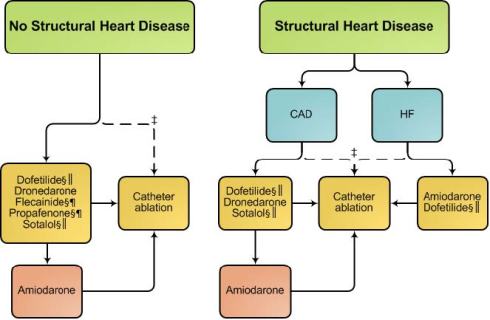
Strategies for Rhythm Control in Patients with Paroxysmal and Persistent AF

AF Complicating ACS: Recommendations

Class I
  • Urgent direct-current cardioversion of new-onset AF in the setting of ACS is recommended for patients with hemodynamic compromise, ongoing ischemia, or inadequate rate control. (Level of Evidence: C)
  • Intravenous beta blockers are recommended to slow a rapid ventricular response to AF in patients with ACS who do not display HF, hemodynamic instability, or bronchospasm. (Level of Evidence: C)
Class IIb
  • Administration of amiodarone or digoxin may be considered to slow a rapid ventricular response in patients with ACS and AF associated with severe LV dysfunction and HF or hemodynamic instability. (Level of Evidence: C)
  • Administration of nondihydropyridine calcium antagonists might be considered to slow a rapid ventricular response in patients with ACS and AF only in the absence of significant HF or hemodynamic instability. (Level of Evidence: C)

Hyperthyroidism: Recommendations

Class I
  • Beta blockers are recommended to control ventricular rate in patients with AF complicating thyrotoxicosis unless contraindicated. (Level of Evidence: C)
  • In circumstances in which a beta blocker cannot be used, a nondihydropyridine calcium channel antagonist is recommended to control the ventricular rate. (Level of Evidence: C)

Pulmonary Disease: Recommendations

Class I
  • A nondihydropyridine calcium channel antagonist is recommended to control the ventricular rate in patients with AF and chronic obstructive pulmonary disease. (Level of Evidence: C)
  • Direct-current cardioversion should be attempted in patients with pulmonary disease who become hemodynamically unstable as a consequence of new onset AF. (Level of Evidence: C)

Pulmonary Disease: Recommendations

Class I
  • A nondihydropyridine calcium channel antagonist is recommended to control the ventricular rate in patients with AF and chronic obstructive pulmonary disease. (Level of Evidence: C)
  • Direct-current cardioversion should be attempted in patients with pulmonary disease who become hemodynamically unstable as a consequence of new onset AF. (Level of Evidence: C)

WPW and Pre-Excitation Syndromes: Recommendations

Class I
  • Prompt direct-current cardioversion is recommended for patients with AF, WPW, and rapid ventricular response who are hemodynamically compromised (64). (Level of Evidence: C)2. Intravenous procainamide or ibutilide to restore sinus rhythm or slow the ventricular rate is recommended for patients with pre-excited AF and rapid ventricular response who are not hemodynamically compromised (64). (Level of Evidence: C)
  • Catheter ablation of the accessory pathway is recommended in symptomatic patients with preexcited AF, especially if the accessory pathway has a short refractory period that allows rapid antegrade conduction (64). (Level of Evidence: C)
Class III: Harm
  • Administration of intravenous amiodarone, adenosine, digoxin (oral or intravenous), or nondihydropyridine calcium channel antagonists (oral or intravenous) in patients with WPW syndrome who have pre-excited AF is potentially harmful as they accelerate the ventricular rate. (Level of Evidence: B)

Heart Failure: Recommendations

Class I
  • Control of resting heart rate using either a beta blocker or a nondihydropyridine calcium channel antagonist is recommended for patients with persistent or permanent AF and compensated HF with preserved EF (HFpEF) (262). (Level of Evidence: B)
  • In the absence of pre-excitation, intravenous beta blocker administration (or a nondihydropyridine calcium channel antagonist in patients with HFpEF) is recommended to slow the ventricular response to AF in the acute setting, with caution needed in patients with overt congestion, hypotension, or HF with reduced LVEF (496-499). (Level of Evidence: B)
  • In the absence of pre-excitation, intravenous digoxin or amiodarone is recommended to control heart rate acutely in patients with HF (270, 497, 500, 501). (Level of Evidence: B)
  • Assessment of heart rate control during exercise and adjustment of pharmacological treatment to keep the rate in the physiological range is useful in symptomatic patients during activity. (Level of Evidence: C)
  • Digoxin is effective to control resting heart rate in patients with HF with reduced EF. (Level of Evidence: C)
Class IIa
  • A combination of digoxin and a beta blocker (or a nondihydropyridine calcium channel antagonist for patients with HFpEF), is reasonable to control resting and exercise heart rate in patients with AF (260, 497). (Level of Evidence: B)
  • It is reasonable to perform AV node ablation with ventricular pacing to control heart rate when pharmacological therapy is insufficient or not tolerated (262, 502, 503). (Level of Evidence: B)
  • Intravenous amiodarone can be useful to control the heart rate in patients with AF when other measures are unsuccessful or contraindicated. (Level of Evidence: C)
  • For patients with AF and rapid ventricular response causing or suspected of causing tachycardiainduced cardiomyopathy, it is reasonable to achieve rate control by either AV nodal blockade or a rhythm-control strategy (52, 300, 504). (Level of Evidence: B)
  • For patients with chronic HF who remain symptomatic from AF despite a rate-control strategy, it is reasonable to use a rhythm-control strategy. (Level of Evidence: C)
Class IIb
  • Oral amiodarone may be considered when resting and exercise heart rate cannot be adequately controlled using a beta blocker (or a nondihydropyridine calcium channel antagonist in patients with HFpEF) or digoxin, alone or in combination. (Level of Evidence: C)
  • AV node ablation may be considered when the rate cannot be controlled and tachycardiamediated cardiomyopathy is suspected. (Level of Evidence: C)
Class III: Harm
  • For rate control, intravenous nondihydropyridine calcium channel antagonists, intravenous beta blockers, and dronedarone should not be administered to patients with decompensated HF. (Level of Evidence: C)


Ora puoi seguire MEDEST anche su Facebook

MEDEST you tube


Clinical practice guideline on diagnosis and treatment of hyponatraemia

2 Mar
Nuove linee guida della European Society of Endocrinology sulla diagnosi ed il trattamento dell’iponatremia
Scaricate il full text in pdf e consultatele off line

Clinical practice guideline on diagnosis and treatment of hyponatraemia

Utilizzate i calcolatori on-line
Per tutte le linee guida recenti visitate la pagina di MEDEST loro dedicata

Linee Guida


MEDEST you tube

AHA/ASA Guideline on Stroke With Brain Swelling

12 Feb

There are uncertainties surrounding the optimal management of patients with brain swelling after an ischemic stroke. Guidelines are needed on how to manage this major complication, how to provide the best comprehensive neurological and medical care….

References:

AHA:ASA Guideline on Stroke With Brain Swelling

Controversies in the Neurosurgical Management of Cerebellar Hemorrhage and Infarction

ACEP Clinical Policies e Trauma Ultrasound eBook

9 Gen

Scaricate le Clinical Policies dell’American College of Emergency Physicians nella sezione delle Linee Guida a loro dedicata.

ACEP Clinical Policies

Sempre da ACEP nuova applicazione e libro multimediale sull’eFAST nel trauma. Una risorsa completa ed interattiva per che usa l’ecografia sia in DEA che sul territorio.

Trauma Ultrasound eBook

Faculty of Pre-Hospital Care Consensus Statements

20 Dic
Nuove Consensus Statements da parte della Faculty of Pre-Hospital Care che riguardano l’immobilizzazione spinale preospedaliera, l’inserzione farmacologicamente assistita della maschera laringea, la movimentazione minima preospedaliera del paziente traumatizzato e l’utilizzo dei device per la contenzione del bacino.
Sono tutte scaricabili liberamente sul nuovo sito della Faculty of Pre-Hospital Care e sulla pagina di MEDEST dedidcata alle linee guida.

Faculty of Pre-Hospital Care new Consensus Statements.

Sedare un paziente di cui si vuole gestire le vie aeree ed inserire un presidio sovraglottico? Un’eresia o una pratica che comunque esiste e come tale deve essere “goveranta”? La lettura di questo Statements apre nuove prospettive ad una pratica non ortodossa ma che, seppure in casi limitati, ha un suo razionale clinico.

L’immobilizazione spinale deve essere selettiva, e non deve riguardare tutti i pazienti traumatizzati a prescindere da criteri clinico prognostici. Già in passato MEDEST si è occupata di immobilizzazione spinale auspicando l’adozione di criteri clinici selettivi per l’utilizzo dei presidi d’immobilizzazione nel trauma preospedaliero. Questa Consensus Statements va finalmente in questa direzione.

Riassumiamo le principali racomandazioni:

  1. L’asse spinale è un presidio da utilizzare solo per l’estricazione del paziente vittima di trauma.
  2. Per il trasporto e le manovre diagnostiche intraospedaliere la barella scoop è il presidio più adatto. Minimizza i movimenti e diminuisce il rischio di lesioni da pressioni in regione dorsale.
  3. L’immobilizzazione in linea del capo è la tecnica raccomandata per l’immobilizzazione del rachide cervicale, in particolare in pazienti: con vie aeree compromesse che necessitano di essere gestite,  sospetto di aumentata pressione intracranica, combattivi ed agitati, bambini.
  4. Il collare cervicale se utilizzato deve essere ben dimensionato e correttamente applicato. Deve essere comunque allentato per evitare discomfort del paziente, facilitare la gestione delle vie aeree ed evitare il possibili innalzamento della pressione intracranica.
  5. I pazienti vittima di trauma penetrante senza segni neurologici non devono essere immobilizzati.
  6. I pazienti coscienti senza segni di intossicazione da sostanze o lesioni distraenti, se non intrappolati, devono essere invitati a posizionarsi autonomamente sulla barella.
  7. Viene scoraggiato l’utilizzo della manovra “standing take down” (paziente in piedi che viene posizionato sull’asse spinale facendolo appoggiare su di essa e poi accompagnato in posizione supina).

Un presidio per l’immobilizzazione pelvica deve essere sempre usato quando è presente un meccanismo di lesione compatibile con lesione del bacino e contemporanea instabilità emodinamica. Secondo gli autori non esistono evidenze che fanno preferire un presidio rispetto ad un altro. L’immobilizzatore del bacino non è controindicato anche in presenza di frattura alta del femore che  coinvolga l’acetabulo.

Sei interssato alle ultime linee guida in Emergenza Sanitaria

Visita la pagina di MEDEST dedicata alle ultime novità dal mondo dell’Emergenza

Logo MEDEST2

2013 Management of bleeding and coagulopathy following major trauma: an updated European guideline

3 Dic
Aggiornate le raccomandazioni Europee sulla diagnosi ed il controllo delle emorragie nei traumi maggiori.
Consultatele e scaricatele in pdf
Alla pagina dedicata alle linee guida trovate tutte le linee guida appena pubblicate su molti argomenti di attualità clinica in medicina d’urgenza.
Linee Guida

MEDEST you tube

To cool or not to cool. Possiamo fare finta di non vedere?

23 Nov

Audit ACR

I dati di questo trial appena pubblicato, hanno acceso il dibattito sull’utilità dell’ipotermia nell’arresto cardiaco, già dalla fase preospedaliera.

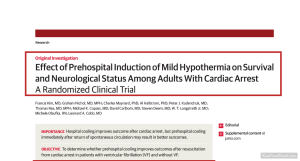
Vediamo il disegno dello studio. I pazienti (1359) venivano randomizzati fin dal ROSC preospedaliero in due gruppi; uno riceveva il trattamento standard mentre il secondo veniva sottoposto ad l’ipotermia (liquidi freddi per via parenterale). I pazienti di entrambi i gruppi venivano poi comunque “raffreddati” all’arrivo in DEA.

I risultati. Nessun beneficio viene dimostrato nei pazienti sottoposti ad ipotermia sia in termini di mortalità che di outcome neurologico. Veine anzi evidenziato un aumento delle recidive di ACR e di scompenso cardico congestizio nei pazienti sottoposti ad ipotermia.

La critica mossa agli auotri riguarda il non stretto controllo della temperatura ed il metodo di raffreddamento. Due litri di salina a 4° infatti somministrati per via endovenosa possono avere un impatto emodinamico significativo.

Allora tutta colpa dello studio condotto male?

Audit ACR

Ecco quindi questo studio  anch’esso dello stesso periodo, condotto in Europa ed in Australia su 950 pazienti.

Lo studio questa volta è molto rigoroso sul controllo della temperatura  e sulla selezione dei pazienti. Indaga quale target di temepratura  dimostri maggior beneficio nei pazienti vittima di ACR, se i classici 33° o 36°, indicati come ipotermia moderata.

I risultati. Anche questo studio non dimostra nessun beneficio derivato dall’applicazione di una ipotermia spinta su quella moderata. Un sensibile peggioramento veniva dimostrato solo nei pazienti ipertermici. Quindi indicazioni sicuramente sul controllo della temperatura per evitare l’ipertermia nei pazienti sopravvissuti da ACR ma ancora nessuna evidenza sul beneficio dell’ipotermia.

Possiamo ancora far finta di non vedere?

Possiamo ignorare che le indicazioni che riguardano l’uso dell’ipotermia, e su cui si basano le attuali linee guida, sono sostenute da studi datati e poco potenti?

Bottom line

Quello che questi studi devono stimolare è l’attenione massima sul “post-resuscitative care” del paziente rianimato da ACR.

Non finisce tutto dopo il ROSC, anzi! Il buon outcome comincia proprio dalla ripresa del circolo!

Massima attenzione va quindi posta sulla globalità trattamento post-rianimatorio:

  • Controllo della ventilazione assistita
    • Controllo delle pressioni
    • Controllo dei volumi
    • Paralisi
  • Evitare l’iperossia
    • Target di saturazione di O2 94-98%
  • Mantenere l’eucapnia
    • Target di EtCO2 35-40
  • Evitare l’ipertermia
    • TTM (Targeted Temperature Management)
  • Trattamento della causa sottostante
    • PTCA
  • Considerare la circolazione extracorporea
    • Pazienti con shock cardiogeno persistente post ROSC

Come e quanto raffreddare il paziente rianimato? Seguiamo con interesse il dibattito internazionale in attesa di nuovi, sicuramente necessari, trial che facciano più chiarezza sull’argomento.

MEDEST you tube


References:

Nuove linee guida 2013

17 Nov

Aggiunte nuove Linee Guida, come sempre full text e liberamente scaricabili. Consultate la sezione Linee Guida su MEDEST.


MEDEST you tubeClicca sul logo e scopri chi siamo!

Customized Anaphylaxis Guidelines for Emergency Medicine. L’anafilassi in medicina d’urgenza.

28 Ago

Molti episodi di anafilassi vengono gestiti in fase preospedaliera ed in Pronto Soccorso dai professionisti di medicina d’urgenza.

La manifestazione dell’anafilassi in questi setting è spesso diverso da quello che si presenta allo specialista allergologo.

Molti dati fanno intravedere come in emergenza l’anafilassi viene spesso miscomosciuta ed il suo trattamento è spesso inadeguato per mancanza di linee guida e protocolli adeguati alla medicina d’urgenza.

In questo lavoro pubblicato sul Journal of Emergency Medicine gli autori adeguano le attuali linee guida sull’anafilassi per l’utilizzo da parte del professionista sanitario che lavora in emergenza medica sia intra che extraospedaliera.

Most episodes of anaphylaxis are managed in emergency medical settings, where the cardinal signs and symptoms often differ from those observed in the allergy clinic. Data suggest that low recognition of anaphylaxis in the emergency setting may relate to inaccurate coding and lack of a standard, practical definition.
In the following article published on Journal of Emergency Medicine the actual guidelines on Anaphylaxis are customized for prehospital and ED professionals.

Anaphylaxis Guidelines for Emergency Medicine J Emerg Med. 2013;45(2):299-306.

Bottom line:

Focus on diagnosis! Don’t miss anaphylaxis!

  • It is important to recognize that the patient may not present with life-threatening symptoms.

  • Even when the initial symptoms are mild, there is significant potential for rapid progression to a severe reaction, which may prove fatal.

  • It often is impossible to predict the ultimate severity of an anaphylactic episode at the time of onset.

  • Any delay in appropriate treatment increases the potential for morbidity and mortality.

Give i.m. epinephrine as first line treatment when anaphylaxis in the most likely diagnosis!

  • The dose is 0.01 mg/kg of a 1:1000 (1 mg/mL)solution to a maximum of 0.5 mg in adults or 0.3 mg in children. Depending on the severity of the episode and the response to the initial injection, this dose can be repeated every 5–15 min as needed.

  • There are no absolute contraindications to the use of Epinephrine for Anaphylaxis. Serious adverse effects are very rare when Epinephrine is administered at the appropriate Intramuscular doses for anaphylaxis.

Logo MEDEST2


ALL Ohio EM

Supporting ALL Ohio EM Residencies in the #FOAMed World

Triggerlab

Let's try to make it simple

thinking critical care

a blog for thinking docs: blending good evidence, physiology, common sense, and applying it at the bedside!

urgentcareultrasound

More definitive diagnosis, better patient care

Critical Care Northampton

Reviewing Critical Care, Journals and FOAMed

OHCA research

Prehospital critical care for out-of-hospital cardiac arrest

SonoStuff

Education and entertainment for the ultrasound enthusiast

phemcast

A UK PREHOSPITAL PODCAST

First10EM

Emergency medicine - When minutes matter...

Songs or Stories

Sharing the Science and Art of Paediatric Anaesthesia

airwayNautics

"Live as if you will die tomorrow; Learn as if you will live forever"

resusNautics

Navigating resuscitation

The Collective

A Hive Mind for Prehospital and Retrieval Med

Dave on Airways

Thoughts and opinions on airways and resuscitation science

FOAMcast

A Free Open Access Medical Education Emergency Medicine Core Content Mash Up

Broome Docs

Rural Generalist Doctors Education

St.Emlyn's

Emergency Medicine #FOAMed

"CardioOnline"Basic and Advanced Cardiovascular medicine" Cariology" concepts and Review -Dr.Nabil Paktin,MD.FACC.دکتـور نبــــیل "پاکطــــین

این سایت را به آن دکتوران و محصلین طب که شب و روز برای رفاه نوع انسان فداکاری می کنند ، جوانی و لذایذ زندگی را بدون چشمداشت به امتیاز و نفرین و آفرین قربان خدمت به بشر می کنند و بار سنگین خدمت و اصلاح را بدوش می کشند ، اهداء می کنم This site is dedicated to all Doctors and students that aver the great responsibility of People’s well-being upon their shoulders and carry on their onerous task with utmost dedication and Devotionاولین سایت و ژورنال انتــرنتی علـــمی ،تخـصصی ، پــژوهشــی و آمــوزشــی طبـــی در افغــانســـتان

EmergencyPedia

Free Open Access Medical Education

Little Medic

Learning everything I can from everywhere I can. This is my little blog to keep track of new things medical, paramedical and pre-hospital from a student's perspective.

Prehospital Emergency Medicine Blog

All you want to know about prehospital emergency medicine

Italy Customized Tour Operator in Florence

Check out our updated blog posts at https://www.italycustomized.it/blog

GoogleFOAM/FOAMSearch

The FOAM Search Engine

EM Lyceum

where everything is up for debate . . .

Pediatric EM Morsels

Pediatric Emergency Medicine Education

AmboFOAM

Free Open Access Medical Education for Paramedics

Rural Doctors Net

useful resources for rural clinicians

Auckland HEMS

Unofficial site for prehospital care providers of the Auckland HEMS service

ECHOARTE

L'ECOGRAFIA: ENTROPIA DELL'IMMAGINE

MEDEST

Prehospital Emergency Medicine

EM Basic

Your Boot Camp Guide to Emergency Medicine

KI Doc

WE HAVE MOVED - VISIT WWW.KIDOCS.ORG FOR NEW CONTENT

Emergency Live

Prehospital Emergency Medicine

AMP EM

Academic Medicine Pearls in Emergency Medicine from THE Ohio State University Residency Program

Prehospital Emergency Medicine

 Academic Life in Emergency Medicine

Prehospital Emergency Medicine

Comments on: Homepage

Prehospital Emergency Medicine

Greater Sydney Area HEMS

The Pre-Hospital & Retrieval Medicine Team of NSW Ambulance