
Continua la pubblicazione di una serie di monografie dedicate alle Best Practices per l’emergenza preospedaliera.
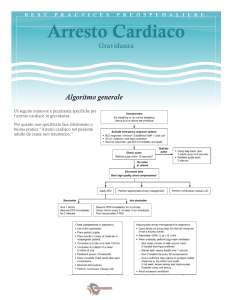
La quarta della serie riguarda l’arresto cardiaco nel neonato.
Potete scaricare il documento cliccando sull’icona sottostante.





Quick tutorial video on simple clinical questions in prehospital emergency medicine


 As usual all your comments will be welcome.



“The GDG had a strong belief that RSI of anaesthesia and intubation delivered by a competent person is the gold standard of care when maintaining the airway of both adults and children and made a recommendation for RSI of anaesthesia and
intubation accordingly.”
“The GDG suggested that the second best device for airway management was the supraglottic device. This device provides less protection than RSI of anaesthesia and intubation against aspiration; however this device provides greater protection than
basic airway adjuncts, and can be administered safely by in the pre-hospital environment by paramedics or physicians staff.”
“Supraglottic devices can only be used in patients without airway reflexes to avoid stimulating vomiting or laryngospasm,, and
are therefore only appropriate for use in patients with a reduced level of consciousness.”
“For patients with airway reflexes, where a supraglottic device cannot be used, the GDG recommended the use of basic airway manoeuvres and adjuncts until such time as RSI of anaesthesia and intubation is available.”
“The GDG therefore concluded that where possible, RSI should be delivered at scene and within a timeframe than minimised
pre-hospital time. Pre-hospitals systems should develop to make this widely available. Where pre-hospital RSI is not possible within a 30-minute window, the GDG recommended transporting the patient with supraglottic or basic airway adjuncts to a MTC within 60 minutes, otherwise to a TU”
“The GDG limited the recommendation to intervene to people who are haemodynamically unstable or have severe respiratory compromise. The GDG agreed that people who have signs of a tension pneumothorax but are haemodynamically normal can wait until hospital for a more definitive diagnosis and possible decompression.”
“Needle decompression is a simpler technique to perform than insertion of a chest drain but is associated with a number of complications. These include the cannula blocking, the catheter not being long enough and therefore, not penetrating the
thoracic parietal pleura, or incorrect placement of the needle, all of which result in the decompression not being successful. The GDG agreed by consensus that open thoracostomy is more effective and stable than needle decompression.”
“An open thoracostomy can only be used on intubated patients. A surgical incision is made, blunt dissection is performed, and the pleura penetrated. The wound is then left open. This is a rapid way of decompressing a tension pneumothorax in a critically injured trauma patient who is intubated. The positive pressure ventilation prevents the thoracostomy wound from acting as an open, ‘sucking’, chest wound”
“The GDG agreed that given the lack of evidence, no recommendation could be made around whether an occlusive dressing for an open pneumothorax should be vented or three-sided. Additionally, the GDG accepted there was no evidence to make a
recommendation around supplementing the dressing with a chest drain in the prehospital setting.The GDG decided through expert consensus to recommend using a simple occlusive dressing to treat an open pneumothorax in the pre-hospital setting. The GDG emphasised the importance of a ‘simple’ dressing that provides an airtight seal that is fast and straightforward to apply. The priority should be transporting the patient to a hospital where a chest drain can be inserted.”
“In the absence of any evidence in favour of haemostatic dressings, the GDG did not believe that they offered any improvement over and above standard dressings with direct pressure.”
“Whereas, immediate haemorrhage control can be achieved by direct pressure, the decision of when direct pressure should be
used over tourniquets was considered controversial as the GDG tried to weigh up the risk and cost of placing a tourniquet on a person who did not require it compared with those that do.”
“The GDG discussed the situation when a pre-hospital practitioner is treating a patient in profound haemorrhagic shock but does not have access to blood products. In this case small boluses of crystalloids would be appropriate.”
“Two studies compared IV morphine with IV fentanyl and found no difference between the interventions for pain relief and adverse side effects.”
Draft closes for comments on 21 of September.

Supporting ALL Ohio EM Residencies in the #FOAMed World
Let's try to make it simple
a blog for thinking docs: blending good evidence, physiology, common sense, and applying it at the bedside!
More definitive diagnosis, better patient care
Reviewing Critical Care, Journals and FOAMed
Prehospital critical care for out-of-hospital cardiac arrest
Education and entertainment for the ultrasound enthusiast
A UK PREHOSPITAL PODCAST
Emergency medicine - When minutes matter...
Sharing the Science and Art of Paediatric Anaesthesia
"Live as if you will die tomorrow; Learn as if you will live forever"
Navigating resuscitation
A Hive Mind for Prehospital and Retrieval Med
Thoughts and opinions on airways and resuscitation science
A Free Open Access Medical Education Emergency Medicine Core Content Mash Up
Rural Generalist Doctors Education
Emergency Medicine #FOAMed
این سایت را به آن دکتوران و محصلین طب که شب و روز برای رفاه نوع انسان فداکاری می کنند ، جوانی و لذایذ زندگی را بدون چشمداشت به امتیاز و نفرین و آفرین قربان خدمت به بشر می کنند و بار سنگین خدمت و اصلاح را بدوش می کشند ، اهداء می کنم This site is dedicated to all Doctors and students that aver the great responsibility of People’s well-being upon their shoulders and carry on their onerous task with utmost dedication and Devotionاولین سایت و ژورنال انتــرنتی علـــمی ،تخـصصی ، پــژوهشــی و آمــوزشــی طبـــی در افغــانســـتان
PHARM, #FOAMed
Free Open Access Medical Education
Learning everything I can from everywhere I can. This is my little blog to keep track of new things medical, paramedical and pre-hospital from a student's perspective.
In memory of Dr John Hinds
All you want to know about prehospital emergency medicine
Check out our updated blog posts at https://www.italycustomized.it/blog
The FOAM Search Engine
where everything is up for debate . . .
Pediatric Emergency Medicine Education
Free Open Access Medical Education for Paramedics
useful resources for rural clinicians
Unofficial site for prehospital care providers of the Auckland HEMS service
L'ECOGRAFIA: ENTROPIA DELL'IMMAGINE
Prehospital Emergency Medicine
Your Boot Camp Guide to Emergency Medicine
WE HAVE MOVED - VISIT WWW.KIDOCS.ORG FOR NEW CONTENT
Prehospital Emergency Medicine
Academic Medicine Pearls in Emergency Medicine from THE Ohio State University Residency Program
Prehospital Emergency Medicine
Prehospital Emergency Medicine
The Pre-Hospital & Retrieval Medicine Team of NSW Ambulance
 MEDEST
“Best Practice” preospedaliera: Arresto cardiaco da trauma
4 AugTra tutte le “Best Practices”, quella che rappresenta più di tutte un cambio radicale di mentalità nell’approccio clinico e terapeutico, è la gestione dell’arresto cardiaco da causa traumatica. Vi prego quindi di leggere attentamente le raccomandzioni raccolte nel documento sottostante e di non esitare a esprimere le vostre riflessioni nei commenti.
Chi è interessato ad approfondire il razionale che sta alla base delle raccomandazioni può scaricare e leggere il documento completo: Arresto cardiaco nell’adulto da causa traumatica full text
Save
Share this:
Tags: ACR, arresto cardiaco, emergency medicine, Emergency Medicine guidelines, Linee guida, medicina d'urgenza, prehospital emergency medicine